

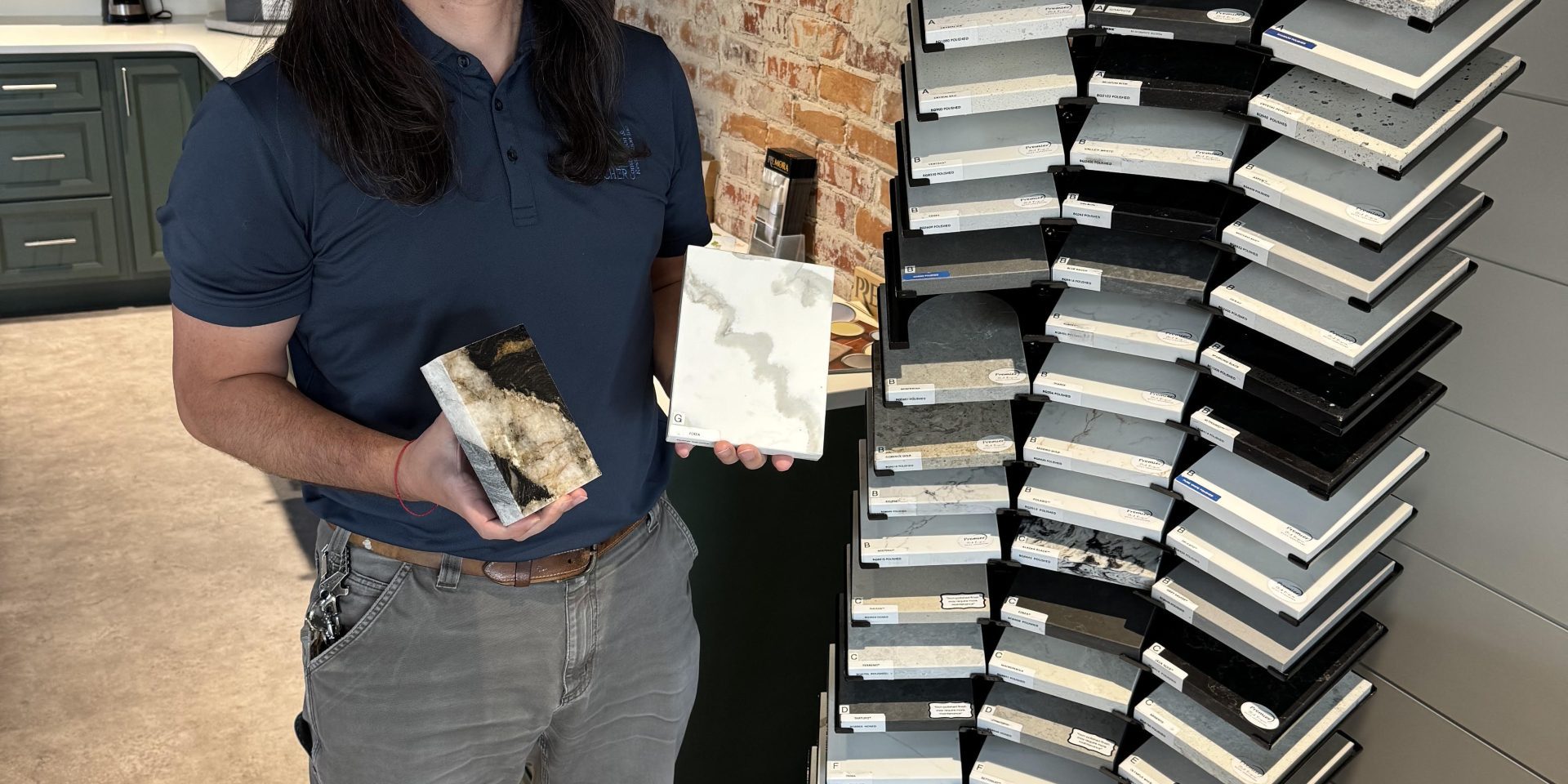
At Visscher Construction & Restoration, we know that selecting the right countertops is a big decision for any home project. Two of the most popular choices are quartz and granite, each offering unique benefits and characteristics. To help you make an informed choice, let’s explore their key differences.
Understanding the Materials
- Quartz: This is an engineered stone, typically made from about 93% natural quartz and 7% resin. Its manufacturing process allows for consistency in pattern and color, and you can find clean whites in quartz options.
- Granite: A natural stone, granite is mined from quarries and is composed of a variety of minerals. As a natural product, granite’s pattern can vary significantly from slab to slab, often featuring unique inconsistencies, mineral variations, pits, and fissures.
Key Differences to Consider
- Heat Resistance: Granite is nearly impervious to heat, making it an excellent choice for hot pots and pans directly from the stove. Quartz, however, can only withstand short periods of heat exposure, and we recommend protecting it to prevent burns.
- Scratch Resistance: Both are scratch-resistant, but not scratch-proof. Quartz is generally resistant to cutlery, though abrasive materials could scratch the resin. Granite, while also scratch-resistant, can be softer and more prone to scratches due to its varying mineral composition.
- Porosity & Stains: Quartz is 99.9% non-porous due to its resin content, which makes it highly stain-resistant. Granite’s porosity varies; darker granites are often dense and non-porous, while lighter ones can be more porous. At Visscher Construction & Restoration, we work with Premier Granite & Stone, who apply a 15-year sealer on all natural stones.
- Antibacterial Properties: Due to its non-porous nature, quartz is antibacterial and resistant to mold and mildew growth. For natural stones like granite, a properly-applied sealer helps ensure antibacterial protection.
- Indoor/Outdoor Use: Quartz is recommended for indoor use only, as direct sunlight and exposure to extreme temperatures and the elements can cause fading, cracking, or other damage. Granite, being a natural stone, is accustomed to the elements and can be used both indoors and outdoors.
Let Us Help You Choose!
Understanding these differences is crucial for selecting the ideal countertop material for your home. Our team at Visscher Construction & Restoration has extensive experience working with both quartz and granite. We can help you navigate the options, considering your lifestyle, style, and project needs.
Ready to start your project? Contact us today to discuss your vision!